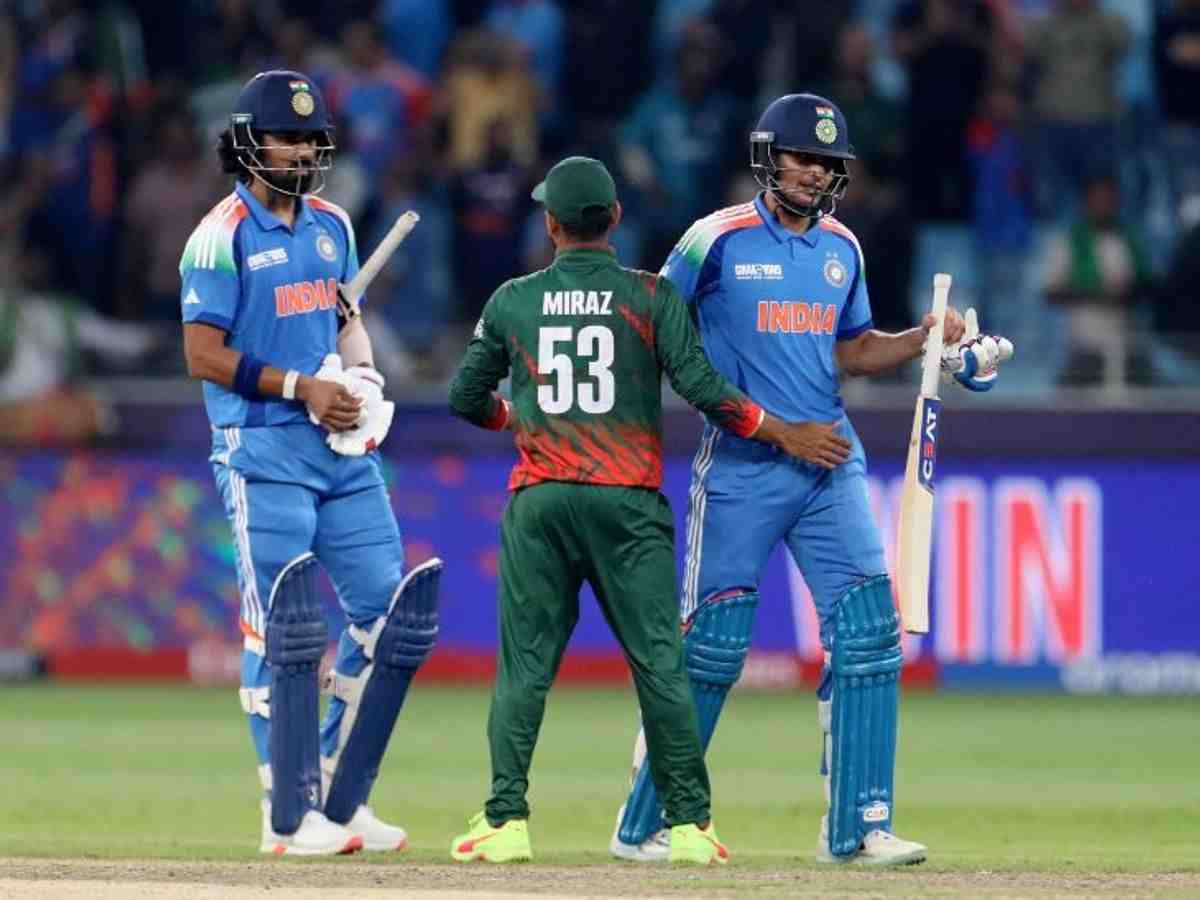
Cricket is supposed to unite nations. Yet, in early 2026, the sport has become a diplomatic battleground between India and Bangladesh — not because of pitch tactics, but because of politics, human rights controversies, and a national conscience that refuses to be ignored.
The latest update from the ICC (International Cricket Council) has only made the situation more charged: Bangladesh has been told it must play its scheduled matches in India or face forfeiture of points in the upcoming T20 World Cup. The message from the cricketing body is firm — politics cannot be an excuse to duck sporting commitments.
India’s position in all of this has been consistent with its larger narrative on national dignity and respect: sport should proceed, but it must not be used as a shield for governments that fail to protect basic human rights in their own backyard.
The Root of the Controversy: Beyond the Boundary
The tensions between these neighboring countries have deepened over the past months for reasons that go well beyond cricket scores:
✔ Bangladesh’s internal communal issues
A series of attacks on minority Hindus in Bangladesh — including violence, forced land grabs, and targeted intimidation — have deeply disturbed Indian observers and human rights advocates alike. Despite media coverage in India and among diaspora communities, global outrage has been minimal, leading many in India to question why selective outrage exists on the world stage.
India’s leadership, political commentators, and large sections of the public have been vocal about this double standard — condemning violence against minorities and calling for accountability.
✔ Sport cannot be separated from social conscience
When extreme nationalism in Bangladesh has coincided with alleged anti-minority violence, India has taken the position that Bangladesh must not expect normal sporting cooperation if its government cannot ensure basic protection for minorities.
This is not a position born of animosity toward the people of Bangladesh — where many cricket fans celebrate the sport passionately — but rather a call for moral consistency.
The ICC’s Intervention: A Necessary Push
By setting this stern ultimatum, the ICC has implicitly sided with the principle that sport must be safeguarded from political manipulation. Letting Bangladesh refuse to play and still retain points would set a dangerous precedent. A sporting federation must remain neutral, but it must also act when boards fail to honor their commitments.
India, which has one of the most robust cricket boards in the world, has consistently advocated for adherence to schedules and fairness in the game — whether it’s Test series, T20 leagues, or World Cup fixtures.
Why India’s Stand Resonates
Here’s why a large section of the Indian public agrees with the stance taken by the BCCI (Board of Control for Cricket in India) and supported by voices across the political and social spectrum:
🔹 Cricket is sacred in India
Whether it’s street cricket or international Tests, the game is deeply woven into the cultural fabric. Indian fans invest not just time and money, but pride in their team and in the tradition of fair play.
🔹 Principle of Sporting Integrity
Cricketing obligations are the result of contractual, historical, and mutual commitments. Walking away without a valid reason undermines the spirit of competition.
🔹 Moral consistency matters
India’s criticism is not just about cricket. It reflects a broader frustration that violence and discrimination against minorities in neighboring countries rarely draw sustained global condemnation, yet India is often accused of being intolerant at home.
When Indian observers point to demographic data showing declining Hindu populations in Bangladesh and Pakistan over decades, or contrast that with the stable growth of minorities in India under constitutional safeguards, the argument is not ideological — it’s empirical.
The Hypocrisy of Selective Outrage
It is a bitter irony:
- The world watches and reacts with enormous energy to distant conflicts
- But shrugs when attacks happen on Hindu minorities just across the border
This selective moral compass has not gone unnoticed in India.
Engagement with cricket — a sport that crosses borders and religions — cannot be hollow. If nations want the camaraderie that sport promises, they must respect the rules of engagement both on and off the field.
India’s public and cricketing institutions are essentially saying:
If a country’s political environment has eroded the trust required for sporting cooperation, then cricket cannot be held hostage to politics — especially when politics itself violates basic human dignity.
Final Word: Cricket Should Unite, Not Obfuscate
The ICC’s intervention forces a moment of reckoning:
Cricket must remain a platform of fair competition, but it also cannot be blind to the realities that shape the societies it represents.
Whether Bangladesh accepts the directive and plays in India, or chooses forfeiture, the decision will be watched not just by cricket lovers — but by those who see in this confrontation a deeper question:
Should sport be a refuge from conscience, or a mirror to it?
For many in India, the answer is clear.
About the Author
Genzews Editorial Team covers global geopolitics, economic trends, and technology. The team focuses on data-driven analysis and simplifying complex global developments for readers.