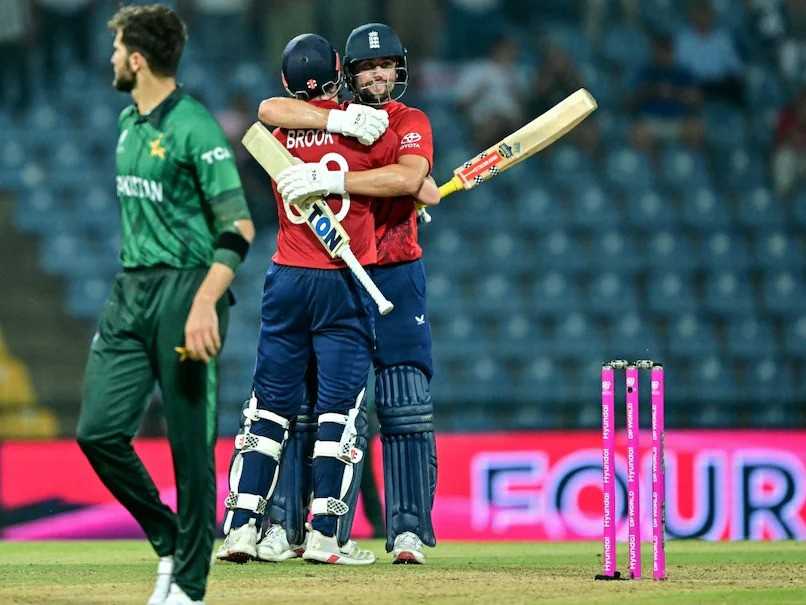
Pakistan are out of the ICC T20 World Cup semifinals — and the elimination cannot be dismissed as a one-off bad day.
Across this campaign, Pakistan showed flashes of talent but lacked structural clarity, tactical evolution, and administrative stability. At elite ICC events, those weaknesses are punished ruthlessly.
This exit reflects deeper systemic issues rather than just scoreboard failure.
The Pakistan Defeat To England That Ended It
Against England, Pakistan posted a competitive total but failed to close out the game in the death overs — a recurring weakness in recent ICC tournaments.
Key observations from the match:
- Powerplay scoring lagged behind modern T20 benchmarks.
- Middle overs lacked acceleration against spin.
- Field placements remained defensive under pressure.
- Death bowling, despite early breakthroughs, leaked critical boundaries.
This pattern mirrors Pakistan’s broader T20 trend over the last two ICC cycles — competitive but tactically conservative.
Pakistan Leadership Questions Around Babar Azam
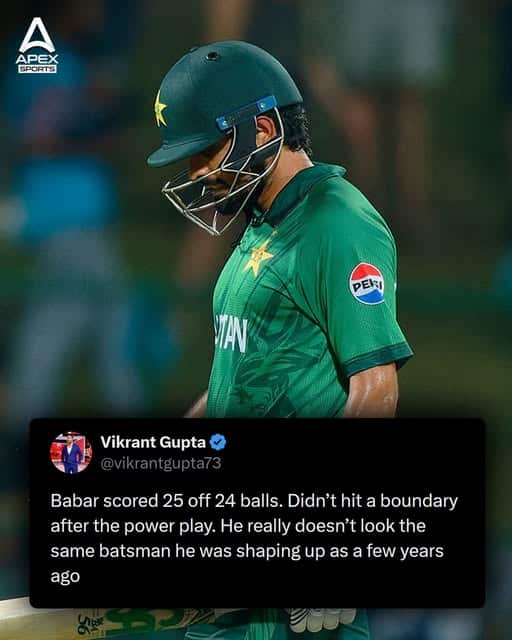
Captain Babar Azam remains one of Pakistan’s most technically gifted batters. However, tournament cricket demands situational aggression and flexible leadership.
Data from recent ICC events shows they often scoring below par in the powerplay compared to teams like England and India. In a format where momentum defines outcomes, slow starts create scoreboard pressure that middle orders struggle to absorb.
Leadership in T20 is increasingly data-driven. Pakistan’s approach still appears instinct-heavy rather than analytics-optimized.
That gap is widening.
Pakistan Cricket Board Instability Before a Global Event
The role of the Pakistan Cricket Board cannot be ignored.
In the months leading to the World Cup:
- Leadership uncertainty dominated headlines.
- Selection debates became public controversies.
- Strategic messaging from the board lacked consistency.
Elite sporting ecosystems thrive on administrative clarity. Compare this with boards like the ECB or Cricket Australia, where centralized planning and long-term T20 roadmaps shape squad identity years in advance.
Pakistan entered the tournament managing distractions instead of insulating players from them.
The Geopolitical Layer
Cricket for PCB operates within a broader geopolitical frame.
- Bilateral cricket tensions with India continue to influence tournament narratives.
- Hosting rights and diplomatic complexities add external pressure.
- Each ICC campaign becomes intertwined with national prestige.
While geopolitics does not bowl overs or score runs, it magnifies scrutiny. Every defeat becomes symbolic, not just sporting.
That weight requires institutional strength. Pakistan’s cricket administration did not provide enough of it.
Tactical Stagnation in a Rapidly Evolving Format
Modern T20 cricket is defined by:
- Aggressive powerplay utilization
- Flexible batting orders
- Matchup-based bowling rotations
- Data-backed field strategies
Teams like England and Australia embrace high-risk, high-reward models. They often defaulted to accumulation-first templates.
In a 20-over format, hesitation is expensive.
Structural Questions Moving Forward
Pakistan must confront hard realities:
- Is domestic T20 cricket producing power hitters suited for global conditions?
- Are selection policies aligned with long-term T20 strategy?
- Does PCB governance provide stability before major ICC events?
The answers will define whether this exit becomes a turning point — or another chapter in recurring disappointment.
Balanced Perspective
It is important to acknowledge:
- Pakistan’s bowling unit showed competitive discipline.
- Individual performances indicated talent depth.
- The margins in T20 remain razor-thin.
However, elite tournaments reward systems, not sentiment.
Until administrative reform aligns with modern tactical philosophy, Pakistan’s risk remaining contenders in theory — but not in semifinals.
Final Assessment
This World Cup exit is not merely a sporting setback.
It is an institutional warning.
For a cricketing nation with immense talent and global fan support, sustained success requires governance stability, tactical modernization, and insulation from political turbulence.
Without that, semifinal dreams will continue to dissolve under pressure.
About the Author
Genzews Editorial Team covers global geopolitics, economic trends, and technology. The team focuses on data-driven analysis and simplifying complex global developments for readers.