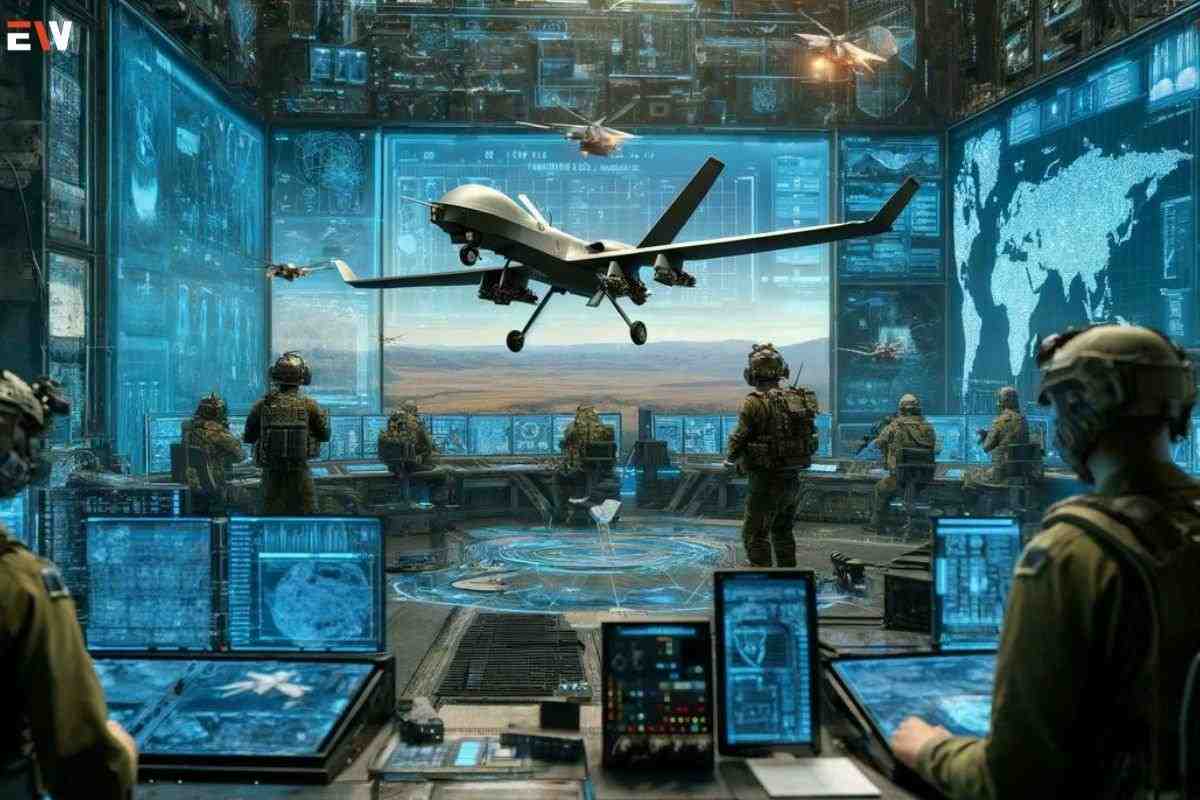
The Rise of a New Battlefield – AI
Modern warfare is no longer defined solely by tanks, missiles, or troop numbers. In 2026, a new force is reshaping global power—artificial intelligence (AI).
From autonomous drones to real-time battlefield analytics, Artificial Intelligence is rapidly transforming how wars are fought, decisions are made, and power is projected across the world.
Understanding this shift is essential—not just for policymakers and military experts, but for anyone trying to grasp the future of global stability.
🌍 WHAT IS AI IN MODERN WARFARE?
Artificial intelligence in warfare refers to systems that can:
- Analyze massive data in seconds
- Make predictions based on patterns
- Assist or automate military decisions
This includes technologies like:
- Autonomous drones
- Cyber defense systems
- AI-powered surveillance
- Predictive military analytics
Unlike traditional weapons, Artificial Intelligence doesn’t just destroy—it decides, adapts, and learns.
⚙️ HOW AI IS USED ON THE BATTLEFIELD
🚁 1. Autonomous Drones and Robotics
AI-powered drones are among the most visible changes in warfare.
They can:
- Conduct surveillance without human pilots
- Identify targets using computer vision
- Execute missions with minimal human input
Some systems can even operate in swarms, coordinating attacks or reconnaissance missions in real time.
🧠 2. Real-Time Decision Making
Modern battlefields generate enormous amounts of data.
Artificial Intelligence systems help:
- Process intelligence instantly
- Predict enemy movements
- Recommend strategic responses
This reduces decision-making time from hours to seconds—giving a critical advantage.
🛰️ 3. Surveillance and Intelligence
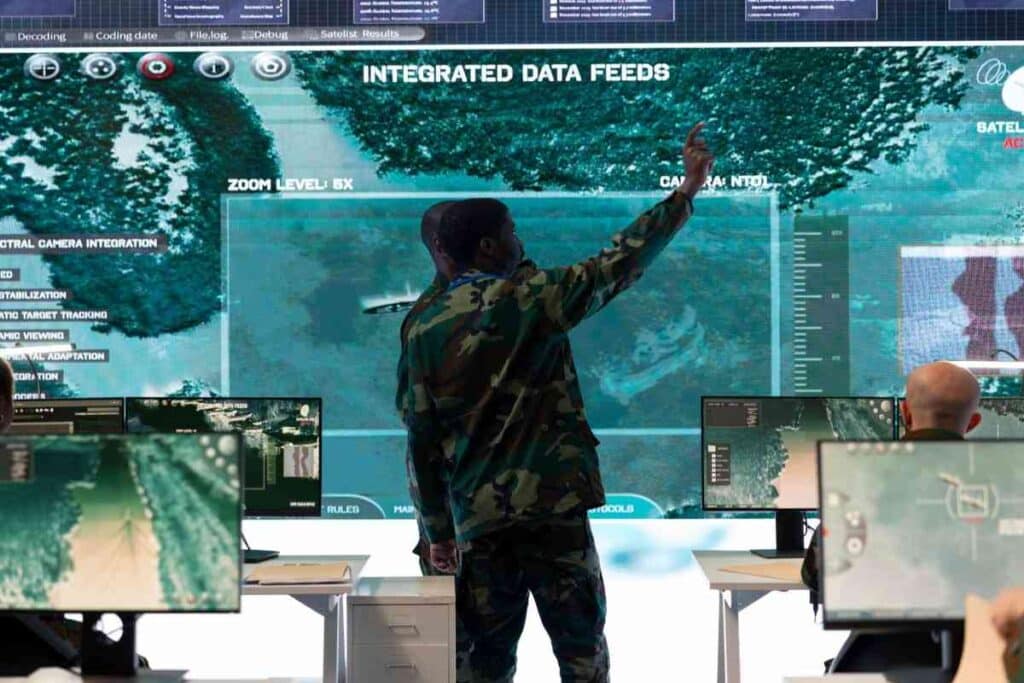
Artificial Intelligence enhances surveillance capabilities dramatically.
It can:
- Analyze satellite imagery
- Detect unusual patterns
- Track individuals or vehicles
This creates a near “always watching” battlefield environment.
💻 4. Cyber Warfare
Artificial Intelligence is now a key weapon in cyber conflicts.
It helps:
- Detect cyber threats instantly
- Launch automated counterattacks
- Protect critical infrastructure
Cyber warfare can disrupt entire nations without a single physical strike.
⚖️ THE STRATEGIC ADVANTAGE OF AI
Artificial Intelligence provides a significant edge in modern conflicts.
⚡ Speed and Efficiency
Artificial Intelligence systems operate faster than humans.
- Instant analysis
- Immediate response
- Continuous monitoring
Speed often determines victory in modern warfare.
🎯 Precision Targeting
Artificial Intelligence reduces collateral damage by improving accuracy.
- Better target identification
- Reduced human error
- Optimized strike planning
📊 Data Dominance
Countries that control data gain power.
Artificial Intelligence transforms raw data into actionable intelligence, making information the most valuable asset in warfare.
📊 Data Dominance
Countries that control data gain power.
Artificial Intelligence transforms raw data into actionable intelligence, making information the most valuable asset in warfare.
🌐 GLOBAL POWER SHIFT
Artificial Intelligence is reshaping the balance of power among nations.
The United States
The US leads in advanced Artificial Intelligence military applications, investing heavily in:
- Autonomous systems
- Defense AI research
- Cyber capabilities
China
China is rapidly advancing in Artificial Intelligence warfare.
- Massive data advantage
- Strong government-backed programs
- Focus on AI-driven military modernization
Russia
Russia emphasizes:
- AI in cyber warfare
- Autonomous weapons
- Electronic warfare systems
🌍 Emerging Players
Other nations are also entering the Artificial Intelligence race:
- Israel
- India
- European countries
Artificial Intelligence is no longer limited to superpowers—it is becoming global.
⚠️ RISKS AND ETHICAL CONCERNS
While Artificial Intelligence offers advantages, it also raises serious concerns.
🤖 Autonomous Weapons Debate
Should machines be allowed to make life-and-death decisions?
This is one of the biggest ethical questions today.
⚡ Escalation Risk
Artificial Intelligence can accelerate conflicts.
- Faster decisions
- Less human control
- Increased chance of mistakes
⚡ Escalation Risk
Artificial Intelligence can accelerate conflicts.
- Faster decisions
- Less human control
- Increased chance of mistakes
🧨 Cyber Vulnerabilities
Artificial Intelligence systems themselves can be targeted.
- Hacking risks
- Data manipulation
- System failures
🧠 EXPERT INSIGHT
From a strategic perspective, Artificial Intelligence is not just a tool—it is a force multiplier.
Military analysts agree that:
- Future wars will be data-driven
- AI will determine speed and precision
- Human roles will shift from execution to oversight
However, experts also warn that over-reliance on Artificial Intelligence could introduce vulnerabilities, especially if systems fail or are compromised.
🔮 THE FUTURE OF WARFARE
Looking ahead, Artificial Intelligence will continue to evolve rapidly.
🚀 Fully Autonomous Battle Systems
Future systems may operate with minimal human involvement.
🌍 Hybrid Warfare Expansion
Artificial Intelligence will combine with:
- Cyber attacks
- Economic pressure
- Information warfare
📡 Integration with Emerging Technologies
Artificial Intelligence will work alongside:
- Quantum computing
- Advanced robotics
- Space-based systems
📊 REAL-WORLD IMPACT
Artificial Intelligence warfare is not theoretical—it is already happening.
- Drone conflicts in multiple regions
- Cyber attacks on infrastructure
- AI-assisted intelligence operations
These developments show that the future of warfare is already here.
🏁 FINAL THOUGHTS
Artificial intelligence is fundamentally changing the nature of global power.
It is:
- Redefining military strategy
- Accelerating decision-making
- Expanding the scope of conflict
However, with great power comes great responsibility.
The challenge for the world is not just to develop AI—but to control it responsibly.
As nations continue to compete in this new domain, the balance between innovation and regulation will determine whether Artificial Intelligence becomes a tool for stability—or a trigger for greater conflict.
About The Author
Genzews Editorial Team covers global geopolitics, economic trends, and technology. The team focuses on data-driven analysis and simplifying complex global developments for readers.


1 thought on “AI Warfare 2026: What You Need to Know”