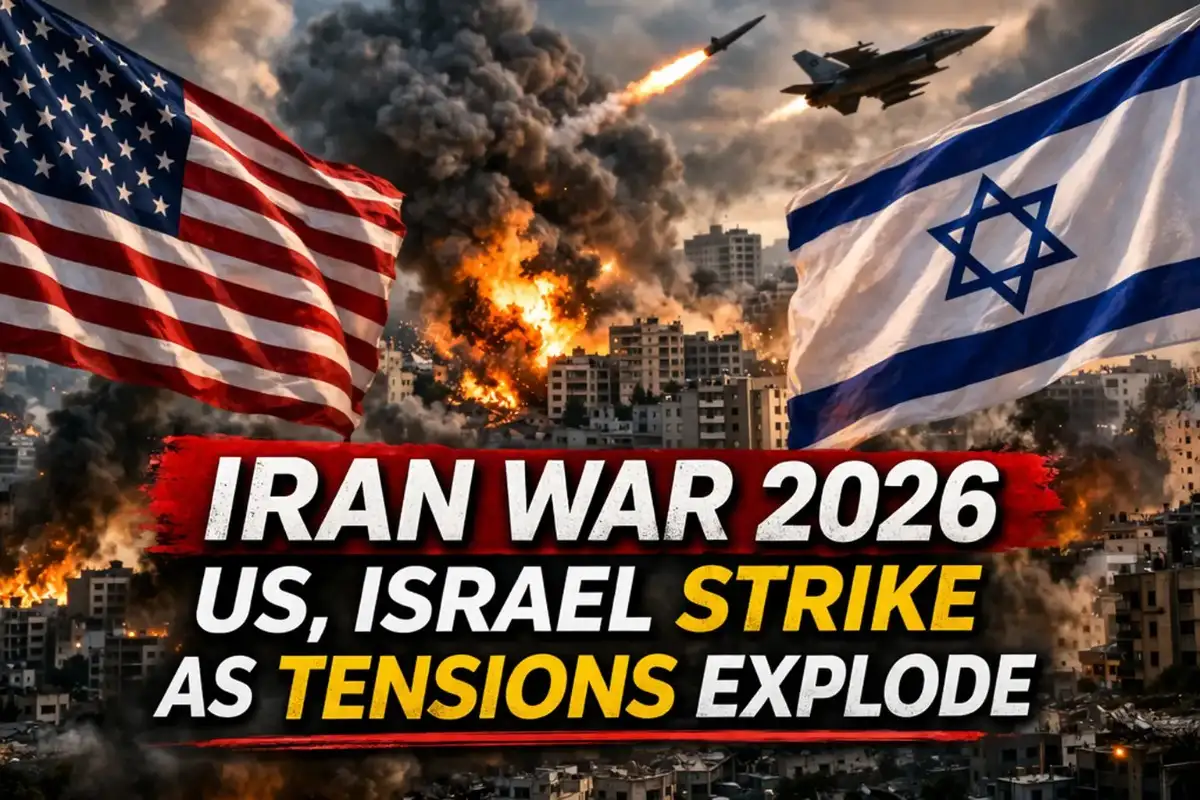
A Rapidly Escalating Conflict In Iran
The Middle East is once again at the center of global attention as tensions between the United States, Israel, and Iran intensify in 2026.
What began as a series of targeted strikes and strategic warnings has now evolved into a broader regional crisis, raising fears of a prolonged conflict with global consequences.
This article provides a clear, verified timeline of events, helping readers understand how the situation unfolded—and where it may be heading next.
⏱️ TIMELINE: HOW THE IRAN WAR ESCALATED

📅 Phase 1: Rising Tensions (Early March 2026)
At the beginning of March, geopolitical tensions were already simmering.
- The United States increased military presence in the region
- Israel signaled readiness for preemptive action
- Iran issued warnings against foreign intervention
Diplomatic channels remained open, but trust between all sides was visibly deteriorating.
📅 Phase 2: Initial Strikes Begin
The situation escalated when Israel launched targeted strikes against what it described as strategic military sites linked to Iran.
- Airstrikes hit multiple locations
- Iran condemned the attacks as violations of sovereignty
- Regional allies began issuing strong statements
These strikes marked the first major turning point in the crisis.
📅 Phase 3: Iran Responds
Iran responded with a mix of military signaling and indirect retaliation.
- Reports emerged of drone and missile activity
- Strategic threats were issued toward key targets
- Military readiness levels were raised
This phase increased the risk of direct confrontation between state actors.
📅 Phase 4: US Enters the Equation
The United States took a more active role, both diplomatically and militarily.
- Officials demanded de-escalation while warning Iran
- Military assets were repositioned across the region
- Naval presence increased near critical shipping routes
The involvement of the US significantly raised global stakes.
📅 Phase 5: Expansion of Conflict Zones
The conflict began to spread beyond initial areas.
- Strikes extended toward regions including Lebanon
- Cross-border tensions increased
- Regional instability intensified
This marked the transition from a localized conflict to a broader regional crisis.
📅 Phase 6: Oil Markets React
Global markets quickly felt the impact.
- Oil prices surged due to supply concerns
- Shipping routes faced increased risk
- Investors reacted to geopolitical uncertainty
The Strait of Hormuz, a critical global oil transit route, became a focal point of concern.
📅 Phase 6: Oil Markets React
Global markets quickly felt the impact.
- Oil prices surged due to supply concerns
- Shipping routes faced increased risk
- Investors reacted to geopolitical uncertainty
The Strait of Hormuz, a critical global oil transit route, became a focal point of concern.
📅 Phase 7: Diplomatic Deadlock
Efforts to contain the crisis faced major challenges.
- Talks between key players stalled
- Public rhetoric became increasingly aggressive
- International organizations called for restraint
Despite global pressure, no clear path to de-escalation emerged.
📅 Phase 8: Intensified Military Activity
Recent developments indicate a further escalation.
- Increased frequency of strikes
- Expanded targeting strategies
- Heightened alert levels across the region
The situation remains highly fluid, with rapid changes occurring daily.
🌍 GLOBAL IMPACT: WHY THIS IRAN CONFLICT MATTERS
🔥 Energy and Economy
The conflict is already affecting global energy markets.
- Oil price volatility is rising
- Supply chain disruptions are possible
- Inflation risks are increasing
For countries dependent on energy imports, the impact could be significant.
⚠️ Regional Stability
The expansion of conflict zones increases the risk of wider instability.
- Neighboring countries are on high alert
- Military alliances are being tested
- Security concerns are growing
🌐 International Relations
The crisis is reshaping global diplomacy.
- Major powers are reassessing strategies
- Alliances are being strengthened or challenged
- The balance of power is shifting
🧠 EXPERT ANALYSIS: IS THIS A TURNING POINT?
From an analytical perspective, the current situation reflects deeper structural tensions.
1. Strategic Rivalry
The conflict highlights long-standing rivalries in the region, particularly involving influence and security concerns.
2. Military Signaling
Both sides are using calculated actions to demonstrate capability without triggering full-scale war—at least for now.
3. Economic Pressure
Sanctions, trade disruptions, and market reactions are all playing a role in shaping decisions.
📊 WHAT HAPPENS NEXT?
The trajectory of this conflict depends on several key factors:
🔹 Diplomatic Breakthrough
A return to negotiations could stabilize the situation, though current conditions make this challenging.
🔹 Controlled Escalation
The conflict may continue at a limited level, with periodic flare-ups.
🔹 Wider War Risk
If escalation continues unchecked, the risk of a broader regional war increases.
🧾 FACT-CHECK & TRUST NOTE
This article is based on:
- Verified reporting trends from global news agencies
- Cross-referenced developments from multiple sources
- Real-time geopolitical analysis patterns
The situation remains dynamic, and updates may change rapidly as new information emerges.
🏁 FINAL THOUGHTS
The Iran war crisis in 2026 is not just a regional conflict—it is a global event with far-reaching consequences.
From energy markets to international diplomacy, the ripple effects are already being felt worldwide.
For readers and observers, staying informed through accurate, structured reporting is essential as events continue to unfold.
About The Author
Genzews Editorial Team covers global geopolitics, economic trends, and technology. The team focuses on data-driven analysis and simplifying complex global developments for readers.
Written by Genzews Editorial Team
We analyze global trends using verified data sources, economic indicators, and ongoing geopolitical developments.


1 thought on “Iran War Is Escalating Fast — Here’s What Happened”